
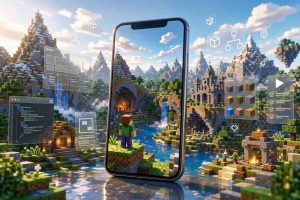
 App development is no longer only about building tools for shopping, messaging, or productivity. Today, it is also about creating experiences that feel fun, immersive, and meaningful. When people use an app, they want more than simple features. They want to explore, interact, and enjoy what they see. That is why Minecraft is such a useful inspiration when talking about app development and finding exciting worlds.
Minecraft has become one of the most recognisable digital experiences because it gives users freedom. Players can explore, build, survive, create, and connect with others in a world that feels open and full of possibility. It is simple in appearance, but very powerful in how it keeps people engaged. This is an important lesson for app developers. A successful app does not always need to be flashy or overly complex. It needs to give users a reason to stay curious and keep coming back.
The idea of “finding exciting worlds” fits Minecraft very well. In the game, players move through forests, caves, mountains, villages, oceans, and underground spaces. Every area feels like a new discovery. There is always something to uncover, whether it is a hidden cave, a rare material, or a creative building idea. This same feeling can be used in app development. An app can guide users through digital spaces that feel rewarding, interactive, and full of opportunities.
This does not mean every app should be a game. Instead, developers can learn from the structure behind Minecraft. The app should give users a sense of progress. It should let them explore in a natural way. It should make each action feel useful. This approach can work in education apps, children’s apps, creative tools, social platforms, and even business platforms. If the experience feels alive, users are more likely to stay engaged.
Minecraft also shows how visual style can shape user experience. Its block-based world is easy to recognise. It has a clear identity. Users know what kind of world they are entering. In app development, visual consistency matters a lot. An app that has a strong theme and a clear structure feels easier to use. People enjoy apps more when they feel well designed and easy to understand.
Another reason Minecraft is relevant is its wide audience. Children enjoy it because it is playful and creative. Adults enjoy it because it offers freedom, strategy, and endless possibilities. That makes it a strong example of how an app can appeal to different users when it focuses on simple interaction and strong core value. App developers should remember this. A clear and enjoyable experience often reaches further than a complicated one.
When developers look at Minecraft for inspiration, one of the first things they can learn is the value of exploration. In many apps, users follow a straight path. They open the app, click one function, and leave. That may be useful, but it is not always memorable. A Minecraft-inspired app can make the user feel like they are discovering new features, unlocking new content, or moving through a digital environment in a more engaging way.
For example, an education app could use a world-building style approach where students unlock different subject areas as if they are entering new biomes. A lesson on science could feel like exploring a mountain lab. A history section could feel like entering an ancient village. This makes the content feel more interactive and less boring. It turns learning into discovery, which is one of the reasons Minecraft works so well.
Creative apps can also benefit from this style. A drawing app, design app, or coding app can give users tools to build their own worlds, projects, or systems. Minecraft is powerful because it allows the player to shape the environment. That same feeling can make other apps more exciting. When users feel that they are not just consuming content but also creating something, they often become more connected to the product.
Social features are another area where Minecraft offers strong lessons. Part of the appeal of the game comes from shared experiences. Friends can build together, explore together, and solve problems together. App developers can use this idea by adding collaborative features. This could be group learning, shared design projects, team challenges, or community spaces where people exchange ideas. The feeling of shared discovery can make an app much stronger.
Gamification also fits naturally into this model. Minecraft keeps users interested through goals, materials, tools, crafting, and survival elements. In app development, this can translate into reward systems, levels, badges, unlockable content, or progress tracking. These features should not feel forced. They should support the main purpose of the app. When done well, they make the experience more motivating and enjoyable.
There is also something important to learn from Minecraft’s simplicity. Even though the world can become very deep, the core idea is easy to understand. Break blocks, place blocks, explore, survive, and build. App developers should aim for this kind of clarity. Users should quickly understand what the app does and why it is worth using. Too many features or confusing screens can drive people away. A clean design with a strong idea often works better.
Minecraft-inspired app development can also support augmented reality and mobile innovation. Imagine an app that lets users build structures in their real environment using block-style design. Or a travel app that presents landmarks as explorable voxel worlds. Or a children’s storytelling app where each chapter opens as a block-based adventure world. These ideas combine creativity with familiar interaction, making the app feel modern and fun.
The real value of using Minecraft as inspiration is not only in the look of the app. It is in the mindset behind the experience. Minecraft encourages curiosity, experimentation, and creativity. These are exactly the qualities that many successful apps need. A good app should make users feel welcome. It should invite them to explore. It should reward them for trying new things.
To build this kind of app, developers need to start with the user. They should ask what kind of world or experience the user wants to enter. Is the goal to learn, create, play, or connect? Once that is clear, the app can be designed around exploration and progress. Every feature should support the journey. Navigation should feel smooth. Visuals should be clear. Interactions should be simple and satisfying.
Testing is also important. Developers should observe how users move through the app. Are they curious? Are they confused? Are they enjoying the process? In Minecraft, users often learn by doing. That same principle can help apps feel more natural. Instead of giving long instructions, the app can guide users through action and discovery.
Performance matters as well. Even a creative idea can fail if the app is slow or unstable. Users expect apps to work well on mobile devices. Quick loading, smooth transitions, and reliable controls all help keep the experience enjoyable. If an app is meant to feel like an exciting world, technical issues should not interrupt that feeling.
In the end, app development is about building digital spaces people want to return to. Minecraft is a strong example because it turns simple mechanics into endless discovery. It gives users freedom while still giving them purpose. That balance is powerful. Whether the app is for education, entertainment, creativity, or social connection, developers can learn a lot from that model.
Finding exciting worlds does not always mean travelling somewhere far away. Sometimes it means opening an app that sparks imagination and invites exploration. With the right design approach, app developers can create those worlds for users every day. A Minecraft-inspired mindset can help turn an ordinary app into something more memorable, more interactive, and more rewarding.